
-
YOGAYOGA
-
FITNESSFITNESS
-
PERSONAL TRAININGPERSONAL TRAINING
-
JOIN USJOIN US
-
HAPPENINGSHAPPENINGS
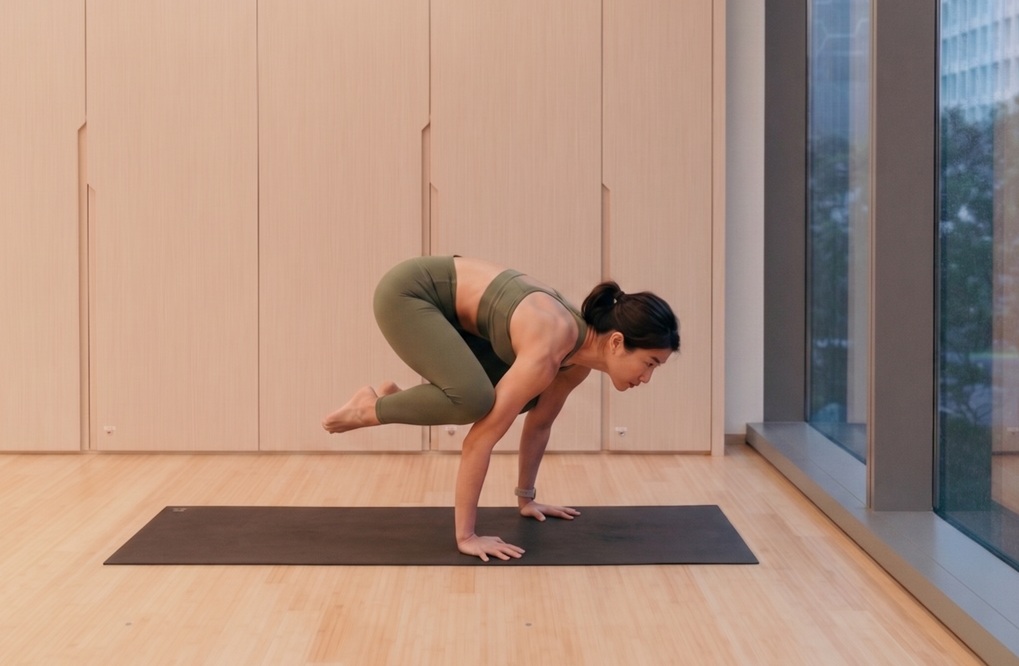
Most people picture yoga as a cool-down activity or something you do for flexibility. With activities such as slow breathing, deep stretches or meditation on a mat, the assumption is understandable, but it describes only a fraction of what yoga actually is. Yoga covers a wide spectrum of deeply restorative to physically demanding styles that challenge strength, stability and endurance in equal measure.
So that begs the question, can yoga build muscle? The answer depends almost entirely on which style you’re practising.
Not all yoga is the same; styles range from deeply restorative to highly demanding, and the right choice depends on your goals
| Yoga Style | Physical Intensity | Best For |
| Hatha | Low to moderate | Foundational poses, mobility, beginners |
| Vinyasa | Moderate to high | Muscle endurance, cardiovascular fitness |
| Ashtanga | High | Strength, discipline, progressive challenge |
| Yin | Low | Deep connective tissue, flexibility, recovery |
| Iyengar | Moderate | Functional strength |
| Restorative | Very low | Rest, nervous system recovery, stress relief |
| Hot | Moderate | Endurance, flexibility, detoxification |
If you are looking to take up yoga for muscle building specifically, explore styles with greater physical intensity.
Muscles grow through a straightforward mechanism: apply resistance, create time under tension, allow recovery. The muscle fibres experience micro-damage under load, repair during rest, and return slightly stronger than before.
What the muscle doesn’t distinguish is whether that resistance comes from a barbell or your own bodyweight. Load is load. Holding Plank for 45 seconds, sustaining Warrior pose through a long flow, or pressing up into Crow Pose all place real, sustained demand on the muscles involved.
Ashtanga and Iyengar are the natural starting point for anyone serious about yoga for strength. Both require moving through sequences that demand meaningful upper body, core and lower body output. Ashtanga’s Primary Series involves yoga poses such as Chaturanga Dandasana (Four-Limbed Staff Pose), which is best described as a hybrid of a low-plank hold and a close-grip (tricep) push-up; an excellent builder of core and upper-body strength. Iyengar yoga takes a different but equally effective approach. Where Ashtanga moves through sequences, Iyengar emphasises precision, alignment and extended holds. Poses are sustained far longer than in most other styles, building functional strength by increasing the time your muscles spend under tension in weight-bearing poses.
When looking at Power yoga or different yoga variants for muscle gain vs weightlifting, both can deliver results. However, the way they do it and the type of muscles being built varies.
Yoga develops slow-twitch muscle fibres: the kind built for endurance, sustained effort and posture control. In practice, that translates to a leaner, more defined physique rather than significant mass.
Weightlifting, particularly progressive resistance training, targets fast-twitch fibres and creates the conditions for hypertrophy, the increase in actual muscle size. Neither outcome is superior, they serve different goals.
| Yoga | Weightlifting | |
| Resistance type | Fixed (bodyweight) | Progressive (adjustable load) |
| Muscle growth ceiling | Moderate | High |
| Functional stability | Strong | Variable |
| Mobility and flexibility | High | Low to moderate |
| Recovery benefit | Built in | Separate |
For beginners and intermediates, yoga for muscle building delivers real, measurable gains. The limitation is that bodyweight resistance has a ceiling. Once you can sustain an hour-long power flow or move cleanly through Ashtanga’s full Primary Series, the body has largely adapted to that load. At that point, continued hypertrophy requires progressive external resistance.
The most effective structure for most people is a hybrid: yoga for strength, mobility and recovery paired with resistance training for progressive overload and mass. Each discipline reinforces the other directly:
Yoga can absolutely build muscle in any real, functional sense of the term, provided you choose the right style and practise with enough consistency to create genuine adaptation. Pairing a targeted yoga practice with Pilates, for deep core stability and postural control, and Fitness training, for progressive overload and mass, is how a complete programme comes together. Each discipline addresses a gap the others leave. Explore expert-led yoga classes as well as Pilates and Fitness classes at PURE and experience firsthand how the three disciplines work together to build a stronger, more resilient body.
Whether you want to tone your body or pump up your cardio, harness the power and grit with PURE Fitness.
From private yoga to specialised classes, enjoy the ultimate yoga experience with PURE Yoga and lead happier, healthier, and more balanced lives.
Transform your technique & physique with our dedicated PURE Pilates classes.

From yoga to fitness, PURE Online provides scheduled and on-demand workout videos to practise anytime and anywhere.

noodfood offers only the good stuff — delicious and nutritious food and drinks including cold-pressed juices, raw foods and organic snacks to keep you happy and healthy.
Whether you want to tone your body or pump up your cardio, harness the power and grit with PURE Fitness.
From private yoga to specialised classes, enjoy the ultimate yoga experience with PURE Yoga and lead happier, healthier, and more balanced lives.
Transform your technique & physique with our dedicated PURE Pilates classes.
From yoga to fitness, PURE Online provides scheduled and on-demand workout videos to practise anytime and anywhere.
noodfood offers only the good stuff — delicious and nutritious food and drinks including cold-pressed juices, raw foods and organic snacks to keep you happy and healthy.


